Kansas Railroad Right-of-Way Hunting
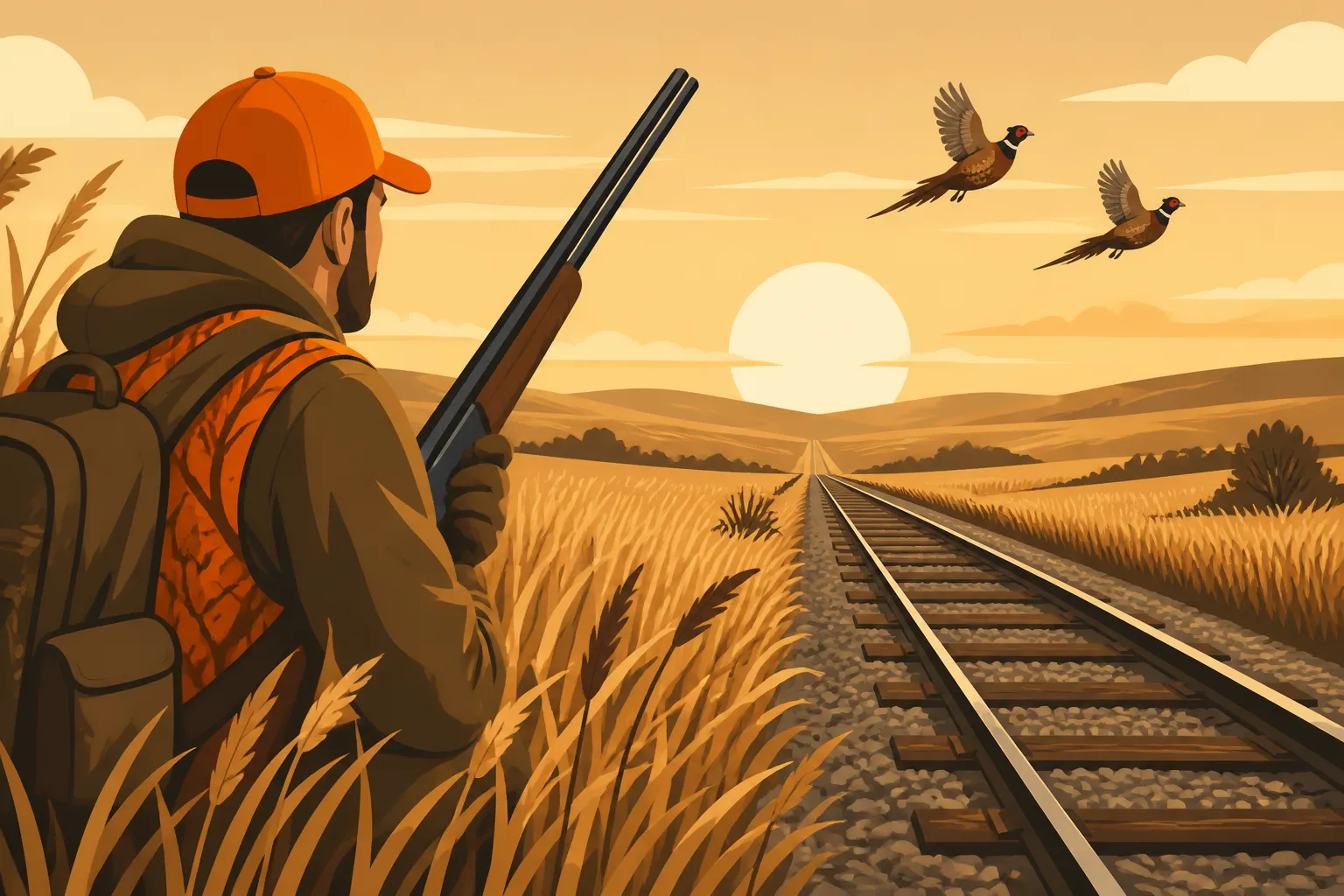
Many Kansas hunters, especially those new to the state's vast plains and agricultural landscapes, often encounter railroad tracks crisscrossing prime habitat. It's easy to spot deer or pheasants along these corridors and wonder if it's fair game. However, understanding the legalities and inherent dangers of hunting on or near railroad rights-of-way is absolutely crucial to avoid fines, serious injury, or worse. This guide will walk you through the complex rules, safety considerations, and responsible alternatives for hunting in Kansas.
Understanding Railroad Right-of-Way Ownership
Who Actually Owns Railroad Property?
Railroad property isn't like a public road shoulder or a county ditch; it's a distinct legal entity. It's often privately owned by the railroad companies themselves, or at the very least, designated for their exclusive use through perpetual easements, even if the tracks themselves traverse a patchwork of private land. This can be a huge point of confusion for hunters who might assume that because a railroad cuts through various properties, it somehow becomes a "neutral" zone, or even publicly accessible. This couldn't be further from the truth.
The railroad companies typically own or control a significant strip of land on both sides of the tracks, which is known as the right-of-way. This corridor is absolutely vital for their operations, including the safe passage of trains, ongoing maintenance, and ensuring clear lines of sight. Imagine the huge machinery, the heavy loads, and the need for unimpeded access – these are all reasons why railroads maintain strict control over their corridors. As hunters, we need to respect this operational reality, just as we would a farmer's private crop field.
Whether the railroad holds outright ownership from an old land grant or a specific easement giving them usage rights, the practical effect for a hunter is the same: it's not public property, and you generally do not have permission to be there. This is a critical distinction from other types of potentially accessible land, like some Hunting Kansas Road Ditches areas, which can sometimes have different rules regarding public access. Always assume railroad land is off-limits unless you have explicit, written permission from the railroad company itself, which is almost unheard of for hunting.
Differentiating Public Land from Railroad Land
It's surprisingly easy to mistakenly assume that certain areas, especially those that appear unkempt or fallow directly next to tracks, are fair game for hunting. This confusion is particularly common if you're already hunting on adjacent public land, such as a Walk-In Hunting Access (WIHA) tract or a state wildlife area. The railroad line might form a tempting boundary, and you might think the edge closest to your public hunting spot is part of the deal. However, it's vital to remember that the railroad right-of-way is a legally distinct entity. Just because it abuts public land doesn't automatically make it public or accessible.
This is precisely where modern mapping tools become invaluable for the responsible hunter. Resources like the onX Layers for Kansas Land Status offer detailed property ownership maps that can clearly show the distinct parcels, including those owned or controlled by railroad companies. These maps can literally draw the line for you, helping you understand precisely where public land ends and private (including railroad) property begins. Without this clarity, a hunter can easily and inadvertently step onto restricted land, even with the best intentions.
Always make it a priority to double-check your position, especially when working close to any boundary. A deer might cross a track, or a pheasant might flush from the brush next to the rail bed, drawing your attention. However, your responsibility as a hunter is to know exactly where you can legally pursue game, and that almost always means staying a safe and legal distance from railroad property. Don't let the excitement of the hunt lead you into a dangerous or illegal situation on land where you shouldn't be.
The Strict Legalities of Hunting on Kansas Railroads
Kansas Trespass Laws and Railroad Property
Kansas has clear and serious trespass laws that apply directly to railroad property. These aren't just polite suggestions; they carry significant legal weight, and violating them can lead to severe consequences. Most railroad rights-of-way are unequivocally considered private property, regardless of whether they are explicitly fenced, posted with "No Trespassing" signs in every spot, or if the land appears unmaintained. The very presence of railroad tracks should serve as a clear, unmistakable indicator of private, restricted access.
Hunting on a railroad right-of-way without explicit, written permission from the railroad company (which, as mentioned, is exceptionally rare for recreational hunting) is considered trespassing. This can lead to a variety of escalating legal consequences, ranging from substantial fines and citations to immediate arrest. It's simply not worth the risk, especially when you consider that railway police forces operate with broad authority to enforce these laws, often acting as fully sworn peace officers with powers similar to local or state law enforcement. They are not merely security guards; they are law enforcement officials focused on safety and security.
Beyond simply being present on the property, discharging a firearm or bow within the right-of-way is another major violation. Many state and local ordinances have specific rules regarding shooting near railways, often put in place for critical safety reasons related to the tracks themselves, but also due to the proximity to other private and public property. Always err on the side of caution and assume that any land associated with a railroad is entirely off-limits for any and all hunting activities. To stay current on all regulations, always refer to the most recent Kansas Regulation Summary Release Date.
Federal Regulations and Interstate Commerce
It's crucial to understand that it's not just state trespass laws you have to worry about when it comes to railroads. Railroads fall under extensive federal jurisdiction due to their essential role in interstate commerce, which means they are governed by federal laws and regulations. This adds another, often more severe, layer of complexity and potential penalties for individuals who trespass on railroad property or interfere with railroad operations. Federal penalties for railroad trespassing can be significantly more severe than state-level fines, and in some cases, can even lead to federal charges and imprisonment.
Consider the fundamental purpose of railroads: they are crucial national infrastructure for moving goods, resources, and sometimes passengers across the entire country. Any interference, whether perceived or actual, with their safe and efficient operation is taken extremely seriously by federal authorities. This means that engaging in hunting activities, or even just being present, on a railroad right-of-way could be interpreted as impeding interstate commerce, creating a safety hazard, or even a security threat, which can trigger a whole different and much more severe set of legal repercussions. It is far more serious than simply stepping onto a farmer's field without permission.
Because of this intense federal oversight, railroad companies frequently employ their own specialized police forces or security details. These officers are highly trained specifically to protect railroad assets and ensure operational safety and security across vast networks. They are not hesitant to enforce both state and federal laws and regulations, and they possess the full authority to do so, including making arrests. This level of proactive, specialized enforcement contrasts sharply with most typical private land trespass situations, where enforcement might primarily come from local sheriff's departments only after a landowner files a complaint. The railroad police are constantly monitoring and enforcing. Violations, including hunting activities, could lead to Kansas Wildlife Violation Penalties and much worse.
Why Railroad Right-of-Ways Are Not Safe Hunting Areas
The Immediate Dangers of Active Rail Lines
Hunting anywhere near active railroad tracks is inherently and profoundly dangerous, completely independent of the legal ramifications. Trains are immense, incredibly fast, and often deceivingly quiet until they are nearly upon you. The sound of a train doesn't always travel far, especially if you're intently focused on the hunt, perhaps wearing hearing protection, or if the wind is blowing the sound away from you. Furthermore, trains cannot stop quickly. A typical freight train traveling at 50 mph can take well over a mile, and sometimes more, to come to a complete stop, even with emergency braking. You are simply not seen, and you cannot be avoided.
Imagine a highly concentrated scenario: you're intently focused on a subtle deer trail that parallels the tracks, or you're stalking pheasants in the dense brush next to the ballast rock. Your senses are completely tuned to the game, not to a potential train. A train can emerge around a bend, or seemingly out of nowhere from behind a line of trees, before you even realize it's there. The sheer force and air pressure from a passing train can also be disorienting and physically dangerous, creating powerful air currents that can easily knock you off balance, especially if you're carrying hunting gear or climbing a bank.
Beyond the immediate threat of trains, the right-of-way itself contains numerous hazards that aren't immediately obvious to an outsider. These can include uneven ballast rock, decaying railroad ties with exposed spikes, discarded industrial equipment, and potential chemical spills or residues from passing freight cars. This isn't a groomed hiking trail or a natural hunting area; it's an industrial transportation corridor. The risk of tripping, falling, or encountering hazardous materials is constant and elevated. Always prioritize your personal safety above any potential shot at game.
Risk of Equipment Damage and Personal Injury
Even if, by some miraculous chance, you managed to avoid a direct collision with a train, discharging a firearm or shooting an arrow anywhere near active railroad tracks carries other significant and serious risks. A stray bullet or arrow could strike a passing train, its valuable cargo, or critically, the tracks themselves. While modern trains and tracks are robust, causing damage to sensitive equipment, a piece of rolling stock, or even creating a tiny flaw in the rail could lead to a catastrophic scenario like a derailment, which no hunter ever wants to be associated with. The legal and financial repercussions for such an event would be astronomical, easily ruining an individual's life and finances.
Consider the potential for ricochet, which is dramatically increased when shooting near hard, metallic, and often uneven surfaces like steel rails, tie plates, or other track components. A bullet striking these surfaces can ricochet unpredictably in any direction, turning a seemingly safe shot into an extremely dangerous situation. This creates an immediate risk not only for the shooter but also for any other individuals in the vicinity, including railroad workers, maintenance crews, or even innocent people on adjacent private property. Safety is always paramount in hunting, and the extreme unpredictability of ricochet on railroad property makes it an absolute no-go.
Furthermore, if you were to sustain an injury while trespassing on railroad property, you would almost certainly be held fully liable for your own medical expenses. In addition, you could face further legal action from the railroad company for your unauthorized presence and any damages incurred. Standard insurance policies typically do not cover activities undertaken illegally or in dangerous, restricted areas. It's a lose-lose proposition from every conceivable angle, underscoring why railroad rights-of-way are completely unsuitable and unsafe for any hunting activities.
Finding Legal and Safe Alternatives in Kansas
Utilizing Public Hunting Lands
Kansas offers a truly fantastic array of public hunting opportunities that are both entirely legal and significantly safer than any railroad right-of-way. Instead of risking the severe dangers and legal issues associated with railroad property, focus your efforts on the designated public lands managed by the Kansas Department of Wildlife and Parks (KDWP) and other cooperating federal agencies. These areas are specifically maintained and managed for hunting and other recreation, and they come with clear rules, boundaries, and safety considerations.
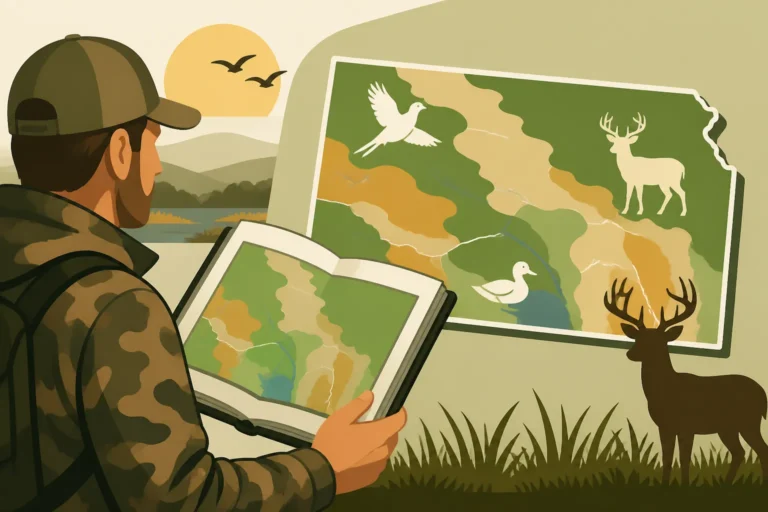
The Kansas Online Hunting Atlas is an indispensable, must-have resource for locating these areas. It meticulously shows all state wildlife areas, various federal lands, and most importantly, the extensive Walk-In Hunting Access (WIHA) program tracts. WIHA lands are privately owned but generously leased by KDWP to provide public hunting opportunities for hunters. They are clearly marked with distinctive signs on the ground, and the online atlas provides detailed, printable maps. You can literally scout these areas from the comfort of your home using aerial imagery, identifying pinch points, dense cover, and potential game patterns before you ever step foot on the ground.
Kansas boasts hundreds of thousands of acres available for public hunting, ranging from dense timbered river bottoms and winding creek draws to vast CRP (Conservation Reserve Program) fields and expansive crop stubble. These diverse lands hold abundant game, including healthy populations of deer, wild turkeys, ringneck pheasants, and bobwhite quail. Take the time to thoroughly explore these numerous options; you will undoubtedly find plenty of productive and exciting spots where you can hunt legally, ethically, and without constantly looking over your shoulder for a train or a railroad officer. For general strategies, consider guides like Public Land Deer Hunting in Kansas.
Here's a quick comparison of various hunting area types in Kansas:
| Feature | Railroad Right-of-Way | WIHA/Public Land | Private Land (with permission) |
|---|---|---|---|
| Legality for Hunting | Generally Illegal (trespass) | Legal (seasonal, specific rules) | Legal (with explicit permission) |
| Ownership/Control | Private (Railroad Company) | Public Access Lease / Government | Private (Landowner) |
| Primary Safety Concerns | High (active trains, industrial hazards, ricochet risks) | Low (typical outdoor risks) | Low (typical outdoor risks) |
| Trespass Risk | Extremely High | Low (if within designated areas/rules) | Low (if proper, documented permission) |
| Permits Required | No (not permitted) | State Hunting License/Permit | State Hunting License/Permit |
| Enforcement Agencies | Federal & Railroad Police, Local LE | State KDWP Game Wardens, Local LE | Local Law Enforcement |
| E-Scouting Tools Utility | Not applicable for access | Excellent (onX Hunt, KDWP Atlas, satellite imagery) | Excellent (onX Hunt, plat maps, satellite imagery) |
Securing Private Land Access Responsibly
If public lands aren't quite meeting your hunting expectations, or you're seeking a more exclusive or controlled experience, securing permission to hunt on private land is another excellent, entirely legal, and often highly productive alternative. Kansas is characterized by its vast amounts of private agricultural and ranch land, and many landowners are often willing to grant hunting access under the right circumstances. This approach requires significant effort, consistent respect, and clear communication, but it’s a far superior and responsible route compared to risking railroad trespass.
The absolute key here is demonstrating genuine respect. Approach landowners well in advance of the hunting season, dressed neatly, and be clear, concise, and honest about your intentions. Offer to help with chores, such as mending fences or basic farm work, respect their property as if it were your own, and always follow up with a sincere thank-you, regardless of the outcome. Even if you don't get permission the very first time, making a good, lasting impression can sometimes lead to future opportunities. Websites like onX Hunt can be helpful in Finding Private Land Access in Kansas by identifying landowner names and contact information, though a face-to-face approach is almost always the most effective and preferred method.
Building these positive relationships is truly the backbone of hunting in many agricultural states like Kansas. When you have legitimate access to private land, you completely eliminate all of the legal and inherent safety concerns associated with railroad rights-of-way. You can then focus entirely on ethical hunting practices, effective tactics, and truly enjoying your time outdoors. It's a responsible choice that benefits both you and the landowner, fostering a positive image of hunters within the community. Always make absolutely certain you understand the exact property boundaries, perhaps using onX Hunt to double-check, to ensure you don't inadvertently stray onto neighboring land or, indeed, back onto railroad right-of-way.
Using E-Scouting Tools for Legal Boundaries
In today's dynamic hunting world, digital scouting tools are no longer just a luxury; they are an indispensable necessity for staying legal, safe, and effective, especially when navigating complex property boundaries like those involving railroads. Advanced platforms such as onX Hunt have truly revolutionized how hunters understand and interact with the landscape. They provide highly detailed parcel data, clearly showing land ownership and precise public land boundaries right on your smartphone or dedicated GPS device. This level of granular detail is an absolute game-changer for avoiding accidental trespass.
Before you even consider leaving home for a hunt, make it a standard practice to use onX Hunt to thoroughly examine your intended hunting area. Specifically look for any railroad lines and take the time to understand their exact right-of-way boundaries. Clearly identify where public land ends and where private land begins, and mentally, or even digitally, mark those critical boundary lines. This proactive, preemptive work can prevent accidental trespass, saving you from potential fines, legal confrontations, and the embarrassment of being in the wrong place. Knowing these precise boundaries is particularly important when hunting close to distinct geographical features like River Oxbows and Deer Movement or Creek Crossings Worth Hanging a Stand On, where linear features often intersect or define property lines.
While some other hunting tools, such as those offered by GoHunt, focus heavily on draw odds, western big game tags, or specific species-related analytics, onX Hunt truly excels specifically at mapping and displaying land ownership and access, which is exactly what you need when navigating the nuanced and sometimes confusing property lines found across Kansas. It empowers you to be an incredibly informed, responsible, and ethical hunter. Never rely on guesswork or assumptions about boundaries; always confirm your exact location and the legality of your presence on any given piece of land. It's not just about staying out of trouble; it's fundamentally about showing proper respect for landowners, railroad operations, and the long-standing traditions and ethics of hunting.
Disclaimer
This article is for general informational purposes only and does not constitute professional advice. Laws, prices and regulations vary by location and change over time. Consult a qualified professional for guidance on your specific situation.