Shooting From a Kansas Road Right-of-Way
It's a common sight for hunters in Kansas: you're driving down a quiet county road, perhaps heading to your deer stand or scouting new pheasant ground, and suddenly, that mature buck steps out of a CRP field or a covey of quail flushes from the ditch. The immediate impulse can be to stop, grab your firearm, and take a shot. However, navigating the rules around shooting from or across a Kansas road right-of-way is absolutely crucial, not just for staying on the right side of the law, but for ensuring the safety of everyone. This guide will clarify what these regulations mean for you as a hunter and how to avoid common pitfalls.
Understanding Kansas Road Right-of-Way Laws for Hunters
The concept of a "road right-of-way" might seem straightforward, but in the context of hunting, it carries specific legal definitions and implications that every hunter in Kansas needs to grasp. It's not just about the paved or graveled surface; it extends much further, and misunderstanding this can lead to serious trouble.
What Constitutes a Road Right-of-Way in Kansas?
In Kansas, a public road right-of-way isn't limited to the actual driving surface. It generally includes the roadway itself, the shoulders, and the ditches on either side. In many rural areas, this can extend a significant distance from the center line, often encompassing what might appear to be open field or even the edge of timber. The exact width can vary depending on the specific road and whether it's a state highway, county road, or township lane, but a common understanding is that it's the area maintained for public travel and utility easements.
Hunters often mistakenly assume that if they are standing in a ditch, they are on "public land" and therefore free to shoot. This isn't necessarily true from a hunting regulation standpoint. While it might be publicly accessible for travel, the hunting laws are designed with public safety in mind, recognizing that these areas are used by pedestrians, cyclists, and other vehicles. It's a tricky area, and the safest approach is to assume the right-of-way is strictly for travel, not for hunting activities involving firearms discharge, unless you have absolute certainty otherwise, which is rare.
Knowing where these invisible lines are is paramount. Many hunters have faced uncomfortable conversations with landowners or law enforcement because they misjudged where the right-of-way ended and private property began. Even if a ditch feels like public ground, the adjacent private landowner often holds the underlying ownership, with the public only possessing an easement for the road itself. This distinction is critical when it comes to hunting.
The Core Restriction: No Shooting Across or From a Public Road
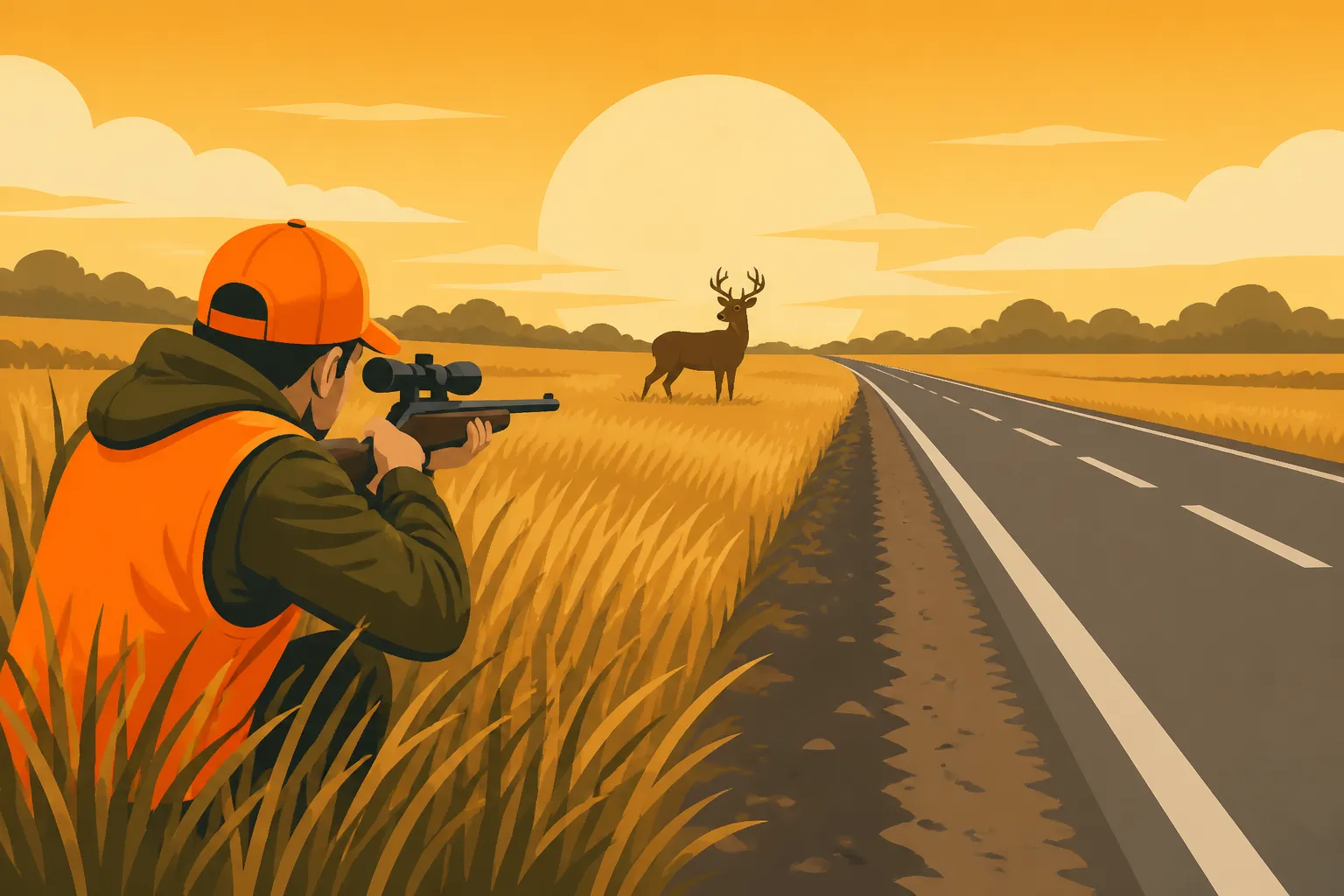
The primary law that governs road hunting in Kansas is quite clear: it is illegal to shoot a firearm from, upon, across, or into a public road, highway, or railroad right-of-way. This rule is absolute, regardless of whether you're aiming at game that is on private land or public land. The emphasis is on where you are discharging the firearm and what direction you are shooting.
Let's break that down. "From" means standing on the road, shoulder, or ditch and taking a shot. "Across" means firing your weapon in a direction that causes the projectile to travel over any part of the road, shoulder, or ditch. This isn't about intent to hit the road; it's about the projectile's path. Even if your target is clearly in a field well beyond the road, if your bullet or arrow flies over the asphalt, it's a violation. The danger this poses to passing motorists, homes, and even livestock is precisely why this law is so strict. A stray bullet can travel a considerable distance, and the risk of an accident is simply too high.
This restriction applies to all types of firearms and even archery equipment. While an arrow may not travel as far as a rifle bullet, the principle of public safety along travel corridors remains the same. It's designed to protect the traveling public from potential harm, both intentional and accidental. When you're out hunting, always be mindful of your surroundings and consider the trajectory of your projectile. If there's any doubt about whether your shot crosses a road or if you're standing within a right-of-way, it's always best to err on the side of caution and hold your shot.
Navigating Public Versus Private Land Along Rights-of-Way
One of the biggest sources of confusion for hunters is the intersection of road rights-of-way with private and public land boundaries. While the right-of-way itself is public access for travel, the ground immediately adjacent to it, and often underlying the ditch, is typically private property. This means even if you're legally standing in what seems like a public ditch, you are almost certainly right next to someone's private land.
To hunt on that private land, even if the deer is standing literally a foot off the ditch, you must have permission from the landowner. The road right-of-way does not grant you permission to hunt the adjacent private ground. Furthermore, even with permission, you still cannot discharge your weapon from within the right-of-way or shoot across it. This requires you to step off the right-of-way, onto the private land where you have permission, and ensure your shot does not cross the road. This can be a very narrow margin of error in some areas.
This scenario becomes even more complex when public hunting lands, such as Kansas Walk-In Hunting Access (WIHA) tracts or State Wildlife Areas, are involved. Even if a WIHA tract abuts a road, the "no shooting from or across a public road" rule still applies. You must be completely off the road right-of-way and on the designated public hunting land to legally take a shot. This is where tools like onX Hunt become absolutely invaluable, providing clear visual overlays of property lines and public access areas so you can precisely position yourself legally. Reading Aerial Imagery for Bedding Cover can also help in identifying potential stand locations far from roads.
Practical Implications for Hunters in Kansas
Understanding the letter of the law is one thing, but applying it practically in the field is another. The goal isn't just to avoid a ticket, but to embrace a responsible and ethical approach to hunting that respects landowners, fellow citizens, and the game itself.
Safety First: Why These Rules Exist
At the heart of the "no shooting from or across a public road" rule is public safety. It might seem like an inconvenience when you see game just out of reach, but these regulations are in place to prevent tragic accidents. Think about the path a bullet travels; a high-powered rifle round can cover miles, and even a shotgun slug can be dangerous at hundreds of yards. The last thing any hunter wants is for a projectile to strike a passing vehicle, a farm equipment operator, a child playing in a nearby yard, or even livestock in a pasture.
Consider a scenario: you spot a coyote in a field bordering a county road. You stop your truck, step out, and lean against the fender to take a shot. Even if you're aiming away from the road, your vehicle is on the shoulder (part of the right-of-way), and if your shot carries over the road, you're in violation. More importantly, what if another vehicle crests a hill just as you pull the trigger? What if your bullet ricochets? The consequences are severe, both legally and ethically.
Ethical hunting demands that we prioritize safety above all else. This means being acutely aware of your backdrop, your shooting lane, and the potential for a projectile to leave your intended target area. Hunting responsibly near roads means being extra cautious, slowing down, and often choosing to pass on a shot that feels borderline. Remember, a lost game animal is a disappointment, but a human injury or fatality is a tragedy that can haunt a hunter for a lifetime.
Penalties and Consequences of Violating Road Hunting Laws
The repercussions for violating Kansas's road hunting laws can be significant and far-reaching. This isn't a minor infraction that results in a slap on the wrist; these are serious offenses that can have lasting impacts on your hunting privileges and your wallet.
For starters, you're looking at substantial fines. These can easily run into the hundreds or even thousands of dollars, depending on the specifics of the violation and whether it's a first offense or a repeat. Beyond the monetary penalty, you also face potential jail time, especially if property damage or injury occurs. Imagine a quick, ill-advised shot leading to impoundment of your hunting equipment, including your firearm, and a court appearance.
Perhaps even more impactful for a dedicated hunter are the potential consequences for your hunting license. Violating road hunting laws can lead to the suspension or revocation of your hunting privileges in Kansas, and potentially in other states through interstate compacts. This means you could be barred from hunting for months or even years. For many of us, hunting isn't just a hobby; it's a way of life, and losing that privilege is a devastating outcome. These laws are enforced by Kansas Department of Wildlife and Parks (KDWP) game wardens, who are diligent in patrolling rural areas, especially during hunting seasons. They take public safety very seriously, as they should.
How to Hunt Legally and Ethically Near Roads
So, how do you hunt effectively and legally in an area crisscrossed by roads, which is so common in Kansas farm country? The answer boils down to preparation, respect, and smart decision-making.
First and foremost, always secure clear permission from landowners if you plan to hunt anywhere near private property, even if it's just a sliver of land adjacent to a public road. A simple conversation can prevent a major headache. Once you have permission, confirm the property boundaries. This is where modern mapping applications are indispensable. Tools like onX Hunt or GoHunt allow you to see property lines, public land boundaries, and even road rights-of-way with remarkable accuracy. Use them to identify safe, legal shooting positions that are well off the road and where your shot will not cross any public thoroughfare. You can also use the Kansas Online Hunting Atlas for public land boundaries.
When setting up a stand or ground blind, always position yourself far enough from the road that you have a clear, safe shooting lane away from the road and any structures. This might mean walking an extra quarter-mile or passing on a seemingly perfect spot that's too close to traffic. Remember, even if the game is standing on private land with permission, if you shoot from the right-of-way or across it, you're breaking the law. Best Stand Locations in Flat Farm Country will often involve finding secluded corners or interior timber that offers privacy and safe shooting lanes far from roads.
A good rule of thumb: if you can see a vehicle approaching, a house, or any other structure that could be in your bullet's path, you probably shouldn't be taking that shot. Always identify your target and what lies beyond it. Ethical hunting is about making responsible choices, even when it means foregoing an opportunity.
Distinguishing Public Access From Road Rights-of-Way
It's easy to conflate public access with road rights-of-way, but they are distinctly different, especially in Kansas where programs like WIHA provide robust public hunting opportunities on private land.
Understanding Kansas Walk-In Hunting Access WIHA Boundaries
Kansas's Walk-In Hunting Access (WIHA) program is a fantastic initiative that opens up hundreds of thousands of acres of private land to public hunting. However, it's crucial to understand that WIHA land, while publicly accessible for hunting, still operates under the overarching state hunting laws, including those pertaining to road rights-of-way. Just because a WIHA tract borders a road does not mean you can shoot from the ditch.
WIHA tracts are typically well-marked with distinctive signage indicating the boundaries. When you enter a WIHA tract, you are crossing from the road right-of-way onto land that has been specifically leased for hunting access. To hunt legally, you must be fully within the boundaries of the WIHA property and ensure your shot does not originate from or pass over the road right-of-way. This often means walking a little deeper into the property before setting up or taking a shot. Kansas Walk-In Hunting Access Explained provides a comprehensive look at how this program works, but the road rules remain universal.
The beauty of WIHA is that it provides access where you might not otherwise get permission. However, it requires hunters to be diligent about knowing their exact location. This is where your mapping apps and a thorough understanding of the WIHA signs become critical. Don't assume anything; verify your position before you even think about raising your weapon. Scouting Kansas Walk-In Tracts Before the Opener is a great way to identify safe and legal entry points and hunting zones well away from road dangers.
Using Mapping Tools to Confirm Your Location
In today's hunting world, digital mapping tools are no longer a luxury; they are an essential piece of gear, especially when hunting near roads or on public access areas like WIHA. Applications such as onX Hunt and GoHunt have revolutionized how hunters understand their location relative to property lines, public lands, and potential danger zones like road rights-of-way.
These apps offer detailed satellite imagery overlaid with property ownership information, public land boundaries, and often color-coded depictions of WIHA tracts. With a quick glance at your phone, you can instantly see if you're standing on private land, public ground, or a road right-of-way. This immediate feedback eliminates much of the guesswork that used to plague hunters, allowing you to make informed decisions about shot placement and safety. For instance, if you're in an area where River Oxbows and Deer Movement might bring deer close to roads, these apps can help identify precise points to set up legally.
Beyond just property lines, many of these apps also show topography, satellite imagery for scouting, and even features like known public access points. This allows you to plan your hunt effectively, identify safe shooting lanes that don't cross roads, and find legal points of entry that keep you well within hunting regulations. Always remember to download offline maps before heading into areas with spotty cell service, ensuring you have access to this critical information regardless of your connectivity. Making good use of these tools is a hallmark of a modern, responsible Kansas hunter.
Legal and Illegal Road Hunting Actions in Kansas
To simplify, here's a quick reference on what's generally allowed and strictly forbidden when hunting near Kansas roads.
| Action | Legality in Kansas | Rationale |
|---|---|---|
| Shooting from a paved road/shoulder | Illegal | High risk to public safety and property. |
| Shooting from a ditch or unpaved right-of-way | Illegal | Ditch is part of the right-of-way; risk to public safety. |
| Shooting across any public road | Illegal | Projectile trajectory poses a risk to passing vehicles/people. |
| Shooting into any public road | Illegal | Extremely dangerous, direct risk to public. |
| Retrieving downed game from a right-of-way | Legal, with caution (no loaded firearm, yield to traffic) | Necessary for game recovery, but safety is paramount. |
| Retrieving downed game from private land | Legal, with permission from landowner (unloaded firearm, no hunting while retrieving) | Always need permission to enter private land, even for recovery. |
| Scouting from a road | Legal (from vehicle or on foot in right-of-way, no firearm) | Observing from public access is generally allowed. |
| Hunting on WIHA bordering a road | Legal, but must be off right-of-way and not shooting across road | WIHA grants hunting access, but road rules still apply. |
Always consult the most current Kansas hunting regulations to ensure you are up-to-date on specific laws.
In Kansas, the convenience of spotting game from a road should never overshadow the importance of safety and legality. The state's laws against shooting from or across a public road right-of-way are clear, absolute, and designed to protect everyone. As responsible hunters, it's our duty to understand these regulations, utilize modern tools like onX Hunt or GoHunt to confirm our location, and always prioritize ethical behavior over an opportunistic shot. By doing so, we not only avoid potential legal trouble but also uphold the integrity of our hunting heritage and ensure safe outdoor experiences for all.
Disclaimer
This article is for general informational purposes only and does not constitute professional advice. Laws, prices and regulations vary by location and change over time. Consult a qualified professional for guidance on your specific situation.